


What can I put in my compost bin? The UK list
Everything from egg boxes to teabags, and the few things to keep out.

DIY compost bin plans · Developed and tested at home for 3 years
Build a rodent-resistant compost bin from two ordinary dustbins in an afternoon. Fill the small bin, tip it into the big one, and dig out dark, crumbly compost every spring.
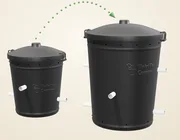 New: see the bins in 3DSpin them round, lift the lids and look underneath.

Quick check
Standing at the bin with an egg box in your hand? Type in anything from teabags to Christmas trees, or tap a common one. Plain answers, no jargon.
Compost gold. Tear them up and they soak up wet peelings nicely. Plastic or foam boxes stay out.
Covers hundreds of everyday items, plants and materials, based on advice from the RHS, Garden Organic and three years of my own composting. See the full A to Z list.
A proven method, made small
Moving compost from one bay to the next is how the big wooden systems on allotments mix and air it. Twin Tip does the same thing in two sealed dustbins, with air tubes running through the middle.
Peelings, plain card and garden waste go in the small bin as you use them.
Three quarters full? Tip it into the big bin. That mixes and airs everything in one go.
Aim to fill both bins by the end of September, then give them the winter off.
In March or April, dig out dark, crumbly compost for beds, pots and veg.

Why people give up on composting
Sound familiar?Rats got into the last bin.
Solid bases, clip-down lids and no hole bigger than 6 mm. It helps keep rats and mice out, even on a driveway.
Sound familiar?It turned into slimy sludge.
Perforated tubes cross the bin at different heights, so air reaches the centre where it usually runs short.
Sound familiar?There's never time to turn it.
Add scraps as you go. The tip does the mixing, so there's no turning and no mess.
See it in 3D
Grab the bins and spin them. Press Show benefits and, as each part comes into view, you'll see what it does for you. Tip them up to see the drain holes, and lift the lids to see the air tubes cross inside.
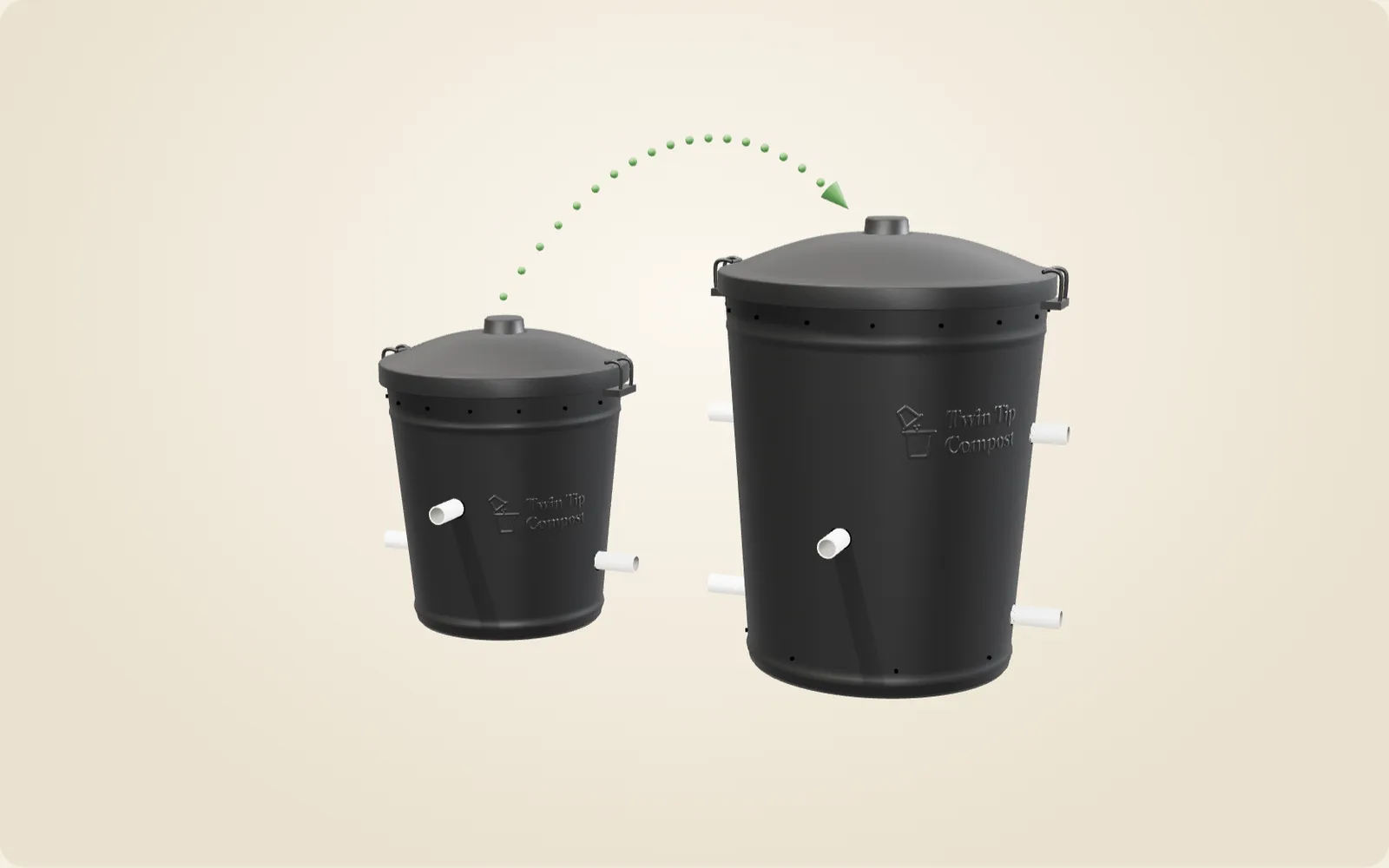
Exact hole positions and measurements are in the Twin Tip build guide.
Free download
A one-page printable for the fridge door. It's the thing that gets the whole household composting, not just you. Pop your email in and it's yours straight away.
What you get
Twin Tip is a set of plans and guides, not a ready-made bin. You build it yourself from widely available dustbins.


Sample pages. 49 pages across the two guides, with photos, drawings and a check after every step.
Compare compost bins
Every type of bin has its place. Here's how they stack up for a typical UK garden.
| Option | Space needed | Keeps rodents out | Turning | Typical cost |
|---|---|---|---|---|
| Open heap | Medium | No | With a fork | Free |
| Plastic bin with open base | Small | Limited, open underneath | With a fork, or slow | Low |
| Wooden three-bay system | Large | No, open slats | Moving between bays | High |
| Compost tumbler | Small to medium | Usually good | Rotating by hand | Often £80 or more |
| Twin Tip | Small, two dustbins | Sealed, 6 mm holes | None, just tip | Under £40 in parts |
Costs are rough guides at typical UK prices and will vary.
From the compost shed
New guides are on the way. Join the list to hear about them, or follow Twin Tip on Pinterest for composting ideas and photos.
Everything from egg boxes to teabags, and the few things to keep out.


Tested at home for three years
I'm Matt. My wife and I have been keen gardeners for about 16 years, with an allotment for the last six. We were forever buying bags of compost that were expensive or disappointing.
My first go, in two free dustbins on the driveway, was a sludgy mess. I didn't want to spend £80 to £200 on a fancy bin, I didn't want to keep turning it, and with rats at the bird feeders it had to keep them out. So I built my own, and by happy accident found that tipping a small bin into a big one mixes the compost for you.
Three years of testing later, it's ready every spring, feeds our veg beds and my hungry tomatoes, and we no longer buy bags of garden centre compost.
"Two dustbins, one length of pipe and an afternoon. The clever part is how you use it."
From my driveway
These are the bins in the Build Guide, photographed step by step as I made them. Tape, a drill, a hole saw and a length of pipe. That's really all it takes.


From the blog
Straight answers to the things people ask me most, from keeping rats out to getting compost that's ready every spring. See all posts

Questions
They can, especially open heaps and bins without a base, or when cooked food, meat or dairy goes in. Twin Tip uses sealed bins with clip-down lids and holes no bigger than 6 mm, which helps keep rats and mice out. Keeping cooked food, meat and dairy out of the bin matters too.
Start with a bin that has a solid base and a lid that clips shut, and keep every opening small. Twin Tip's build plans show exactly where to drill 6 mm air and drain holes in two ordinary dustbins so air gets in but rodents struggle to. No bin can be guaranteed to keep out a determined rat, but this design is built to be rodent resistant.
Put a layer of torn cardboard in the bottom, then add fruit and veg peelings, plain cardboard and garden waste as you use them. Don't let any one type pile up, and cover fresh scraps with a few leaves or some torn card. That's really all there is to it.
Fruit and veg peelings, coffee grounds, rinsed eggshells, plain cardboard, egg boxes, toilet and kitchen roll tubes, grass clippings (a little at a time), leaves and soft garden trimmings. Keep out meat, fish, dairy, cooked food, citrus, pet waste, diseased plants and perennial weed roots.
Not with Twin Tip. Tipping the small bin into the big bin mixes and airs the compost for you. The Royal Horticultural Society describes moving compost from one bin to another as the most thorough way to turn it.
It depends on the season and what goes in. Garden compost usually takes from several months to a couple of years. With Twin Tip, a simple rule of thumb is to fill both bins by the end of September and check the compost in March or April.
Two ordinary lidded dustbins (50 litres and 110 litres), one 3 metre length of 32 mm plastic waste pipe, a drill and a hole saw. It takes about two hours and needs no woodworking skills.
Like a three-bay system, it moves compost from one bin to the next to mix it, but in two sealed dustbins that take up far less space and help keep rodents out. Unlike a tumbler, there's no heavy drum to rotate, and it costs much less to build.
Yes. Twin Tip uses sealed dustbins with a solid base, so it works on paving as well as soil or gravel. Standing each bin on a drip tray stops any liquid staining the ground.
Twin Tip is a set of DIY build plans and a composting guide, so you build the bin yourself from widely available dustbins. The guides are available now as a £5.99 instant PDF download from my Etsy shop.

The step-by-step Build Guide, the Composting Guide, a fridge sheet and a bin calculator. £5.99 as an instant download.
Get the plans · £5.99Not ready yet? Get the free fridge sheet and composting tips by email.
We'd like to use Google Analytics cookies to see how people find and use this site. Cookie policy
